A reassuring, practical guide from a Scottish wedding photographer
Let’s get the obvious bit out of the way: if you are getting married in Scotland, there is always a chance of rain. There is also a chance of sunshine, wind, four seasons before the speeches and a sky that changes completely in the time it takes to pour a glass of fizz.
That does not mean rain will ruin your wedding photographs. It simply means we work with the day we have rather than the forecast we imagined.
Some of the most atmospheric wedding photographs are created under heavy clouds, in soft drizzle or during the few quiet minutes after a shower. The light can be beautiful, colours become richer and Scottish landscapes look every bit as dramatic as they should.
More importantly, your wedding is not a styled shoot built around perfect weather. It is a day filled with your people, your emotions and everything that happens in between. Rain is only one small part of that story.
First, don’t spend the week refreshing the forecast
Scottish weather forecasts can change by the hour. A symbol showing rain for the entire day might mean a ten-minute shower, while a supposedly dry afternoon can still produce a surprise downpour.
Checking constantly rarely changes anything. It usually creates unnecessary worry before a day you should be looking forward to. I will keep an eye on the conditions and make decisions based on what is actually happening at your venue, not on an app predicting the weather several days in advance.
We do not need a completely dry day. Very often, all we need is a small break in the rain and ten or fifteen minutes in the right place.
Will we still get outdoor wedding photographs?
Usually, yes. Rain in Scotland rarely falls at exactly the same intensity all day. We can take advantage of lighter spells, move portraits slightly earlier or later, or step outside for a short burst when the opportunity appears.
This is where experience matters. A wedding timeline should guide the day, but it should never be so rigid that we miss the best light or ignore a dry spell because portraits were written down for a different time.
I will never expect you to stand miserably in heavy rain simply so I can say we photographed outside. If you are happy to embrace a little drizzle, brilliant. If you want to protect your dress, hair or shoes, we find another solution. You are allowed to have preferences.
What if it rains all day?
If the rain genuinely does not stop, the plan changes rather than disappears.
Before photographing a wedding, I look for more than one option. That might include covered entrances, archways, windows, staircases, doorways or indoor spaces with good natural light. Even a small sheltered area can be enough to create portraits that feel elegant and intentional.
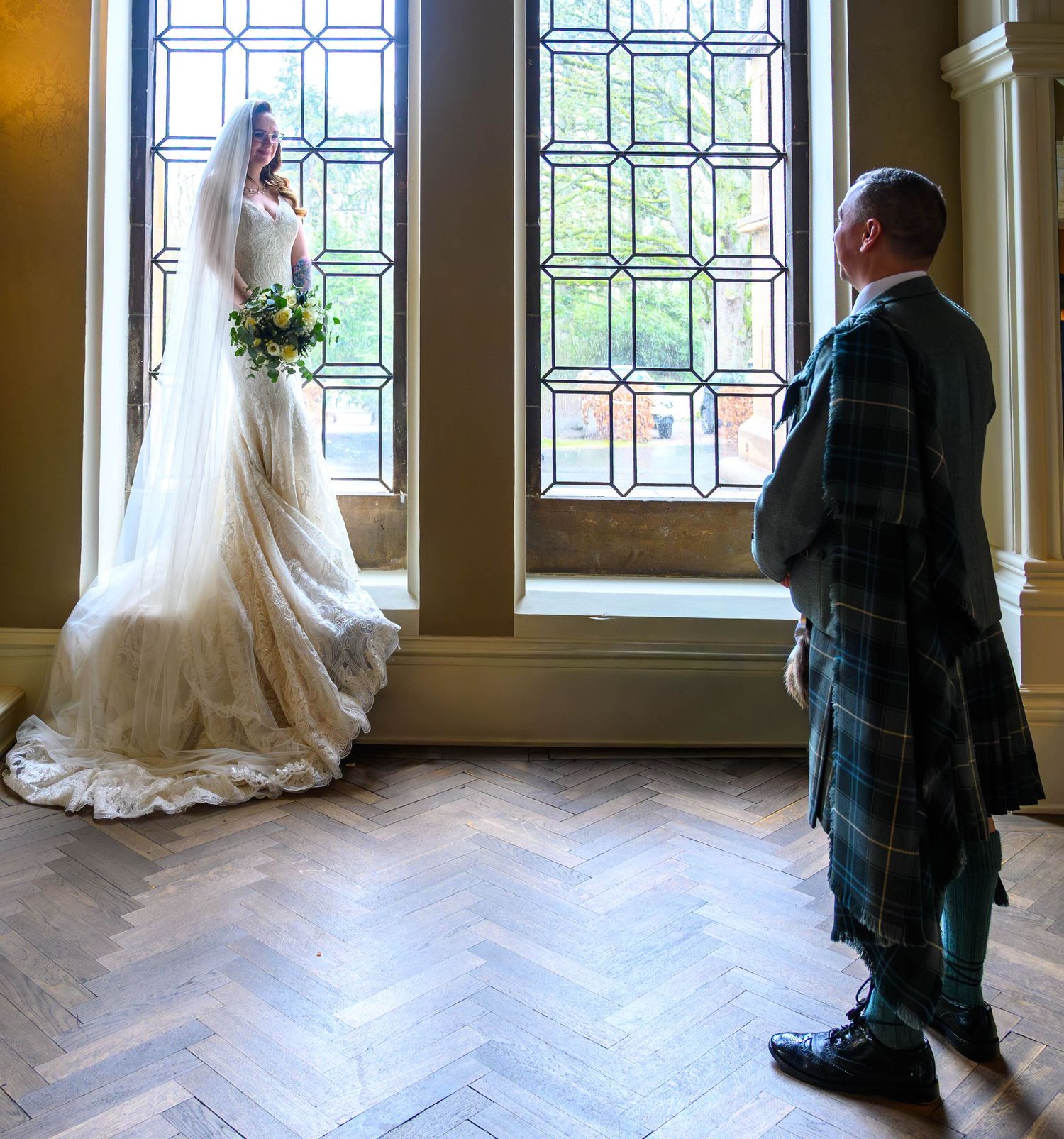
Window light is particularly flattering and can give photographs a quiet, editorial quality. Darker interiors can create something moodier and more dramatic. Your venue does not need to contain a huge bright room for us to make beautiful images. It needs a photographer who can recognise the light that is available and use it well.
Rain can actually make your photographs more beautiful
Bright midday sunshine is not automatically better light. It can create squinting, harsh shadows and very high contrast. Cloud cover softens the light, which is often wonderfully flattering for portraits.
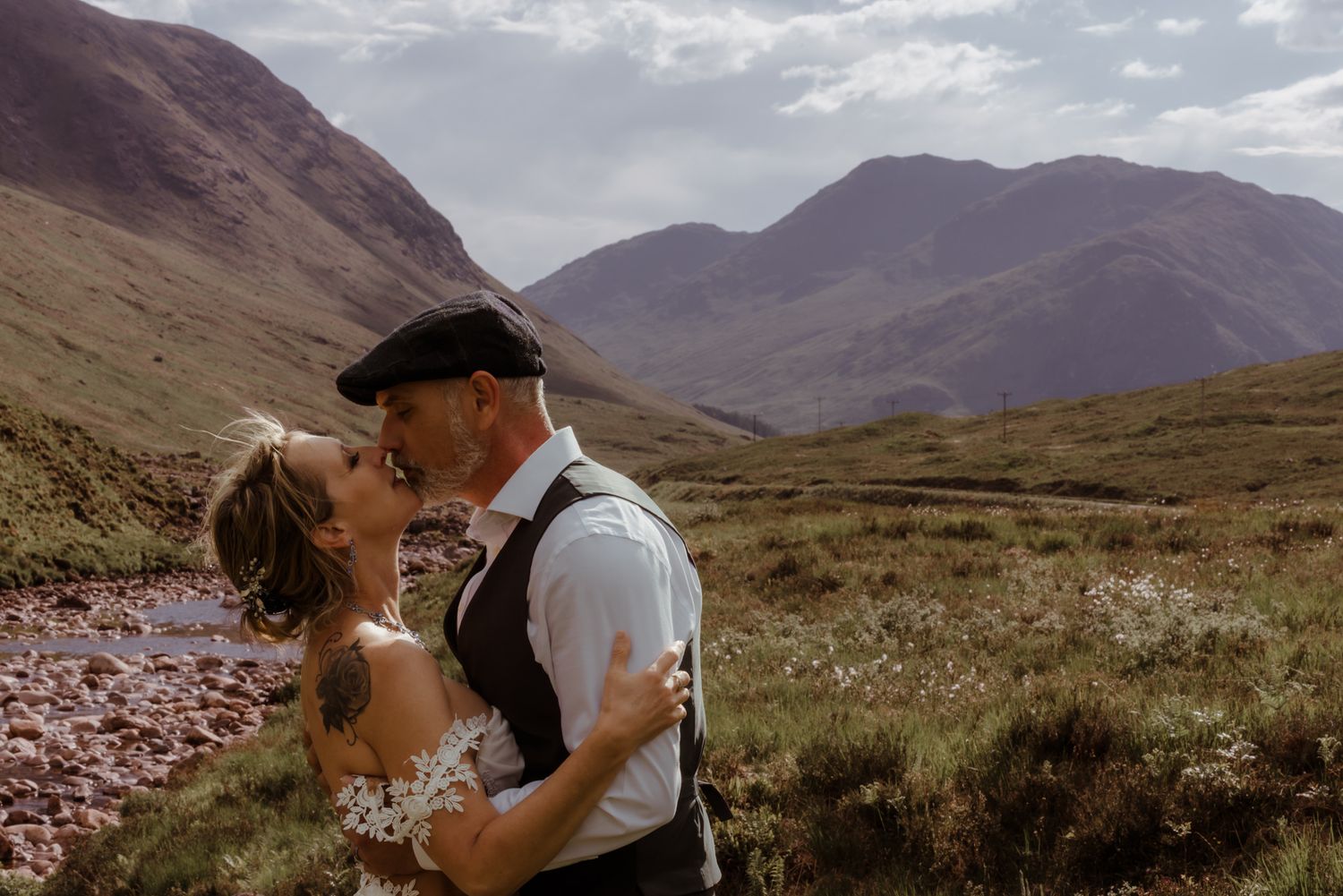
Rain also deepens the greens in the landscape, adds reflections to paths and brings texture to stone buildings. At a castle, country house or Highland location, those darker skies can create the atmosphere couples travel to Scotland hoping to find.
After the rain, the air can look clearer and the light can change very quickly. That is why I am always watching what the sky is doing, even while the rest of the wedding carries on inside.
Should we buy umbrellas for our wedding?
A couple of good umbrellas can be useful, but there is no need to turn your wedding into an emergency umbrella warehouse.
Clear umbrellas let in more light and do not introduce a strong colour cast. A classic black umbrella can look elegant too, particularly with a formal outfit or against a grand venue. I would avoid lots of brightly coloured, mismatched umbrellas unless that genuinely suits the character of your day.
Umbrellas work best as practical tools rather than props that appear in every photograph. We can use them to move between locations, protect you while setting up a portrait or create one deliberately rain-soaked image, then put them away again.
What about family photographs?
Group photographs do not have to be abandoned because the lawn is wet. We can use a sheltered entrance, a covered terrace or a suitable indoor area. The priority is finding somewhere with enough room, clean light and a background that does not distract from the people.
This is also one reason I recommend keeping the essential group list manageable. A concise list gives us more flexibility and means we can move quickly if the weather offers only a short dry window.
Protecting the dress, shoes and flowers
If the ground is wet, sensible preparation makes everything easier. Bring a spare pair of shoes if your main pair will sink into grass or feel slippery on stone. Ask someone in the wedding party to help with your train while we move between locations. Your bouquet can also be used to keep your hands occupied while someone adjusts the dress.
A slightly marked hem is not the end of the world, but I will not dismiss it either. The dress belongs to you, and it is your decision how adventurous you want to be. We can create beautiful portraits without dragging you through a muddy field.
The photographs that matter will still happen
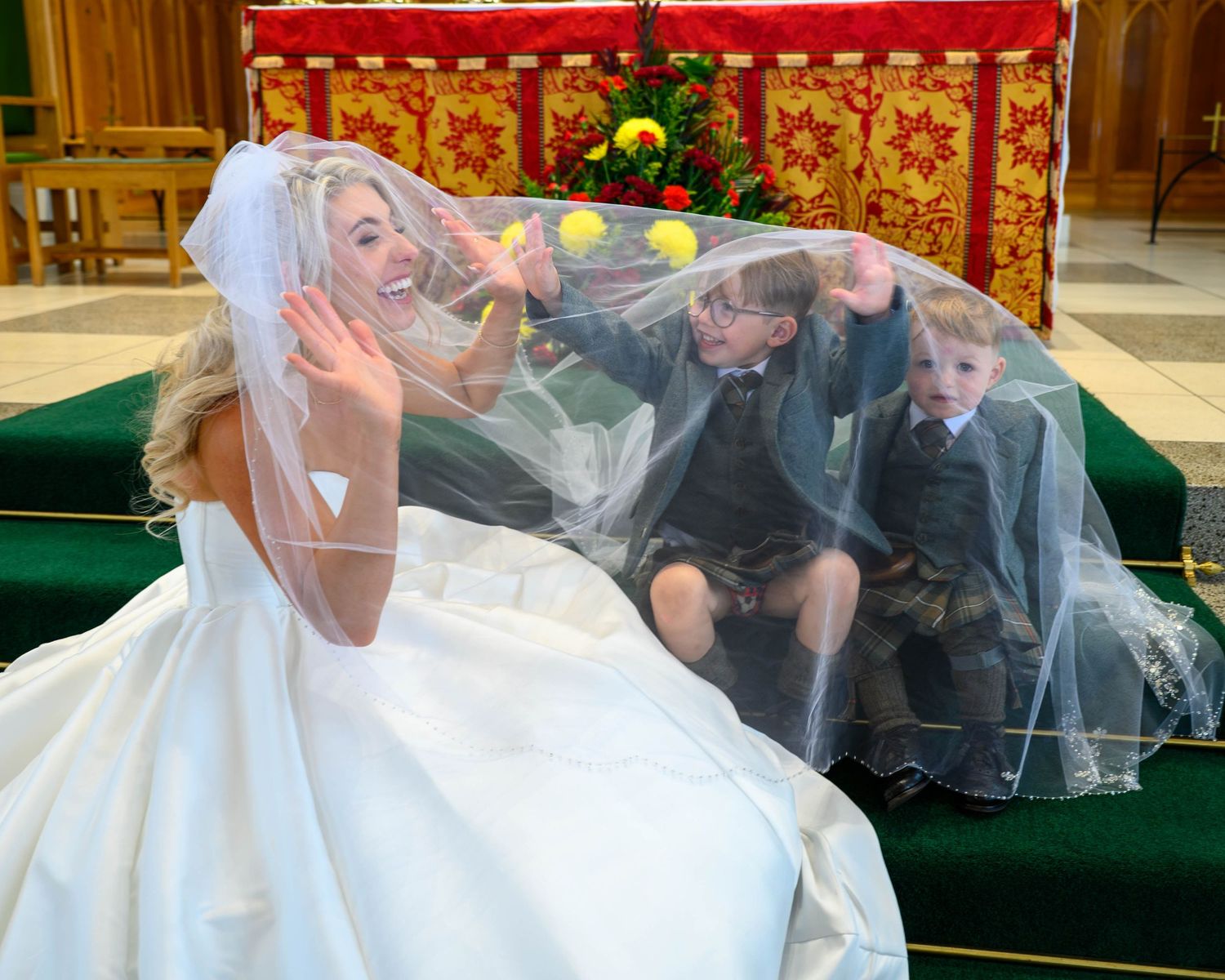
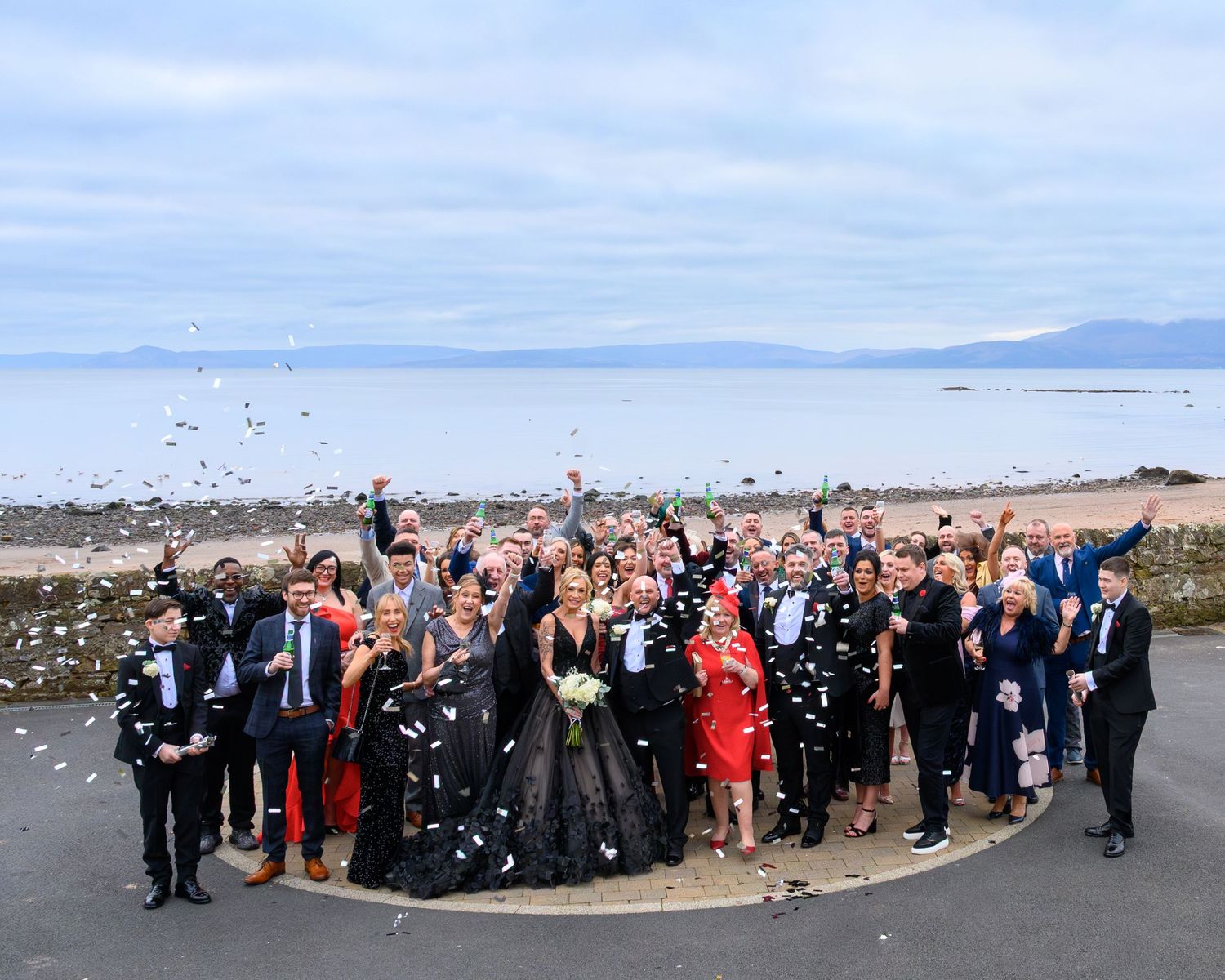
Rain does not alter the expression on your partner’s face when they first see you. It does not stop the laughter during the speeches, the hugs from people you love or the chaos on the dance floor. Those moments are the heart of your wedding gallery and they continue whatever is happening outside.
A good wedding gallery should not depend on one viewpoint, one location or one hour of perfect light. It should feel complete because it holds the atmosphere of the whole day.
A flexible plan is better than a perfect forecast
My approach is to plan properly, watch the conditions and stay flexible. If the weather gives us ten beautiful minutes, we use them. If it gives us dramatic skies, we make the most of them. If it keeps us inside, we work creatively with the venue and the light available.
You do not need to pretend you are delighted about rain. You also do not need to fear that it will destroy the photographs you have imagined. The most useful thing you can do is choose a photographer whose work you trust and then allow the day to unfold.
Because years from now, you are unlikely to look through your wedding album and think about the forecast. You will remember how the day felt, who stood beside you and just how loved you were.
Planning a wedding in Scotland?
If you are planning your wedding in Glasgow, across Scotland or travelling from overseas, I would love to hear what you have in mind. Tell me about your venue, your people and the photographs you want to remember. Rain plan included.